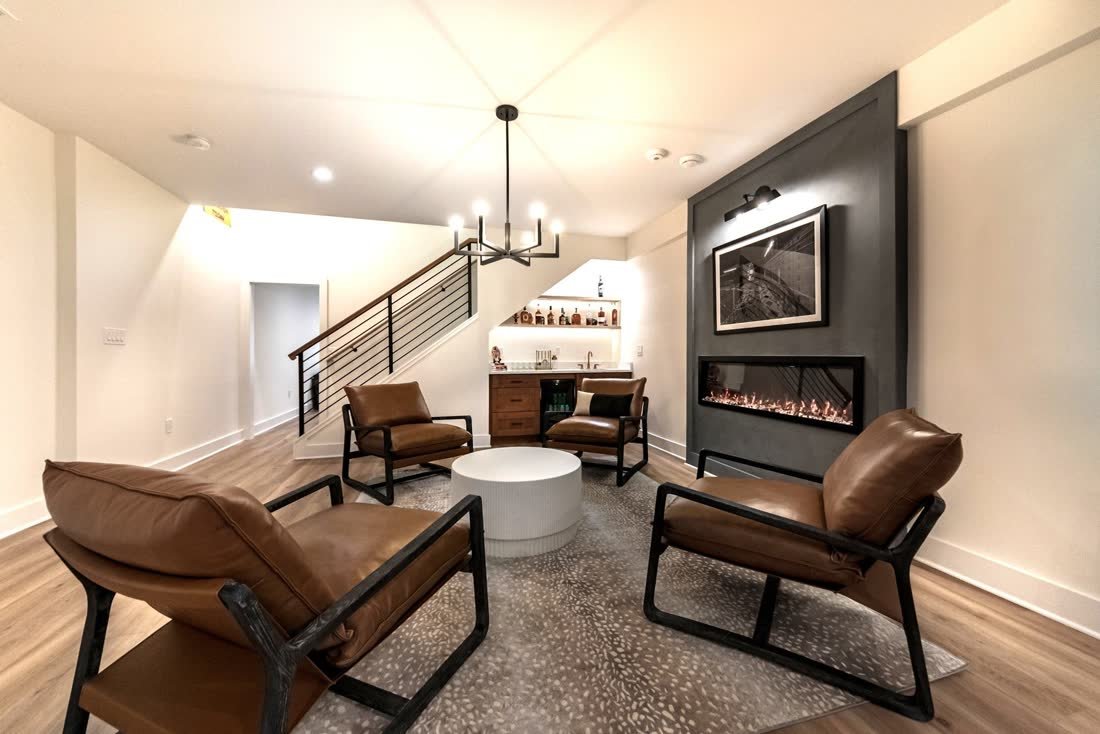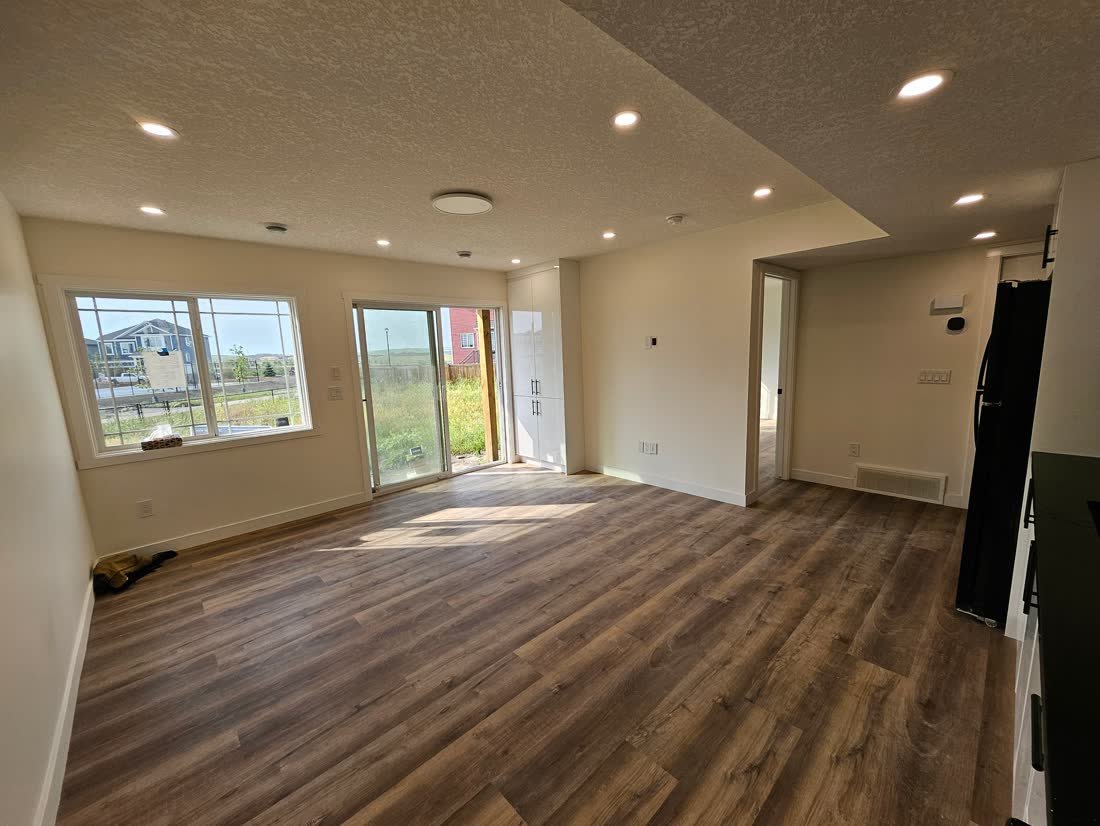
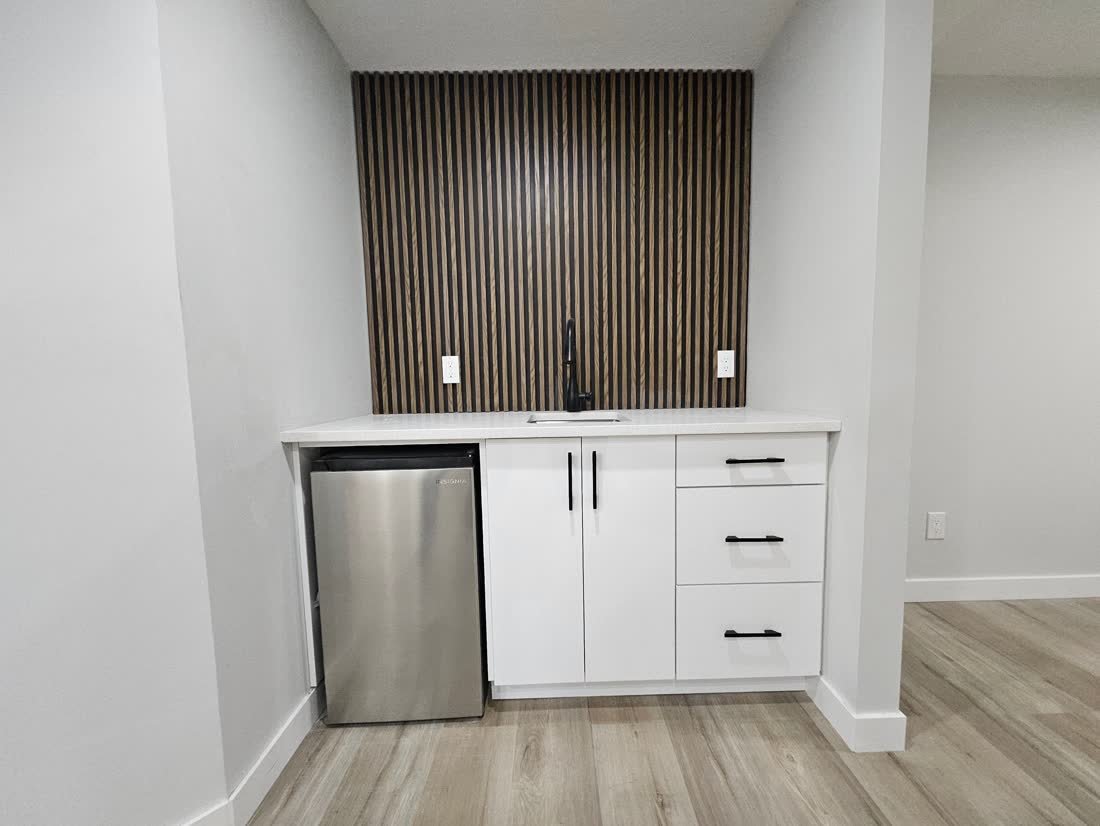
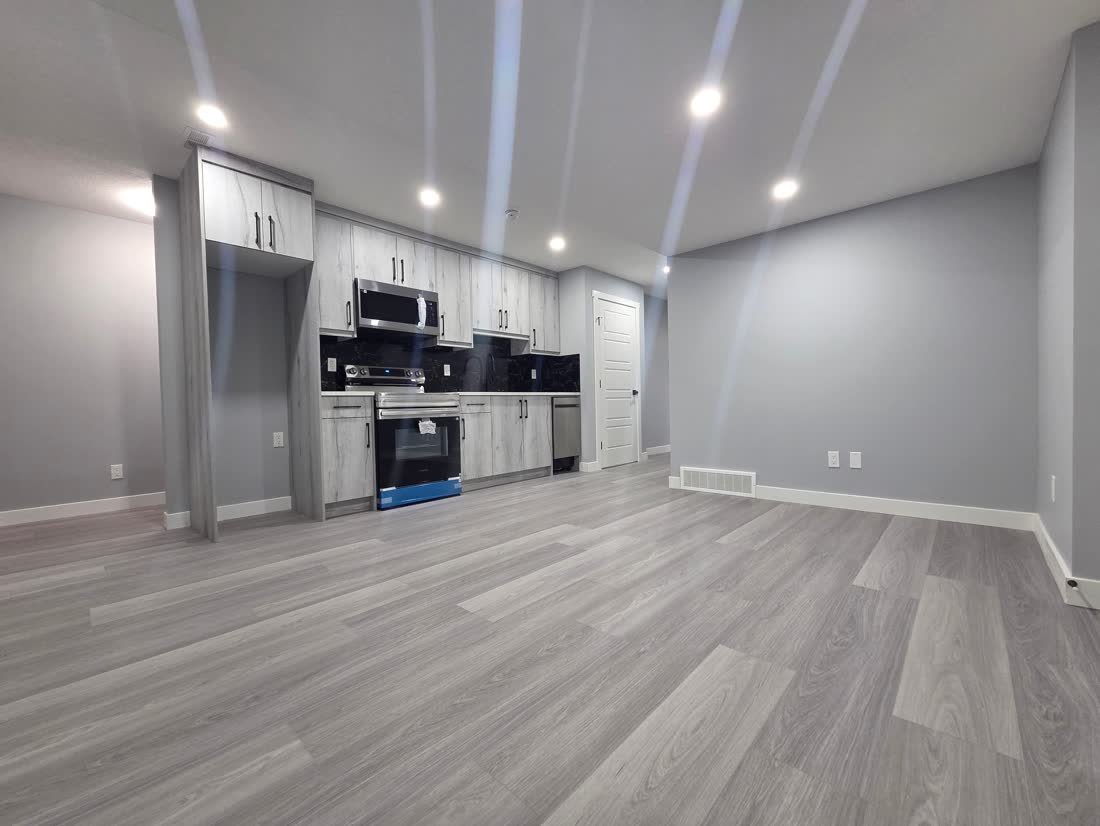
A finished basement generally adds value in Calgary by converting unfinished space into finished, heated living area. Below grade space is valued differently from above grade area, and the gain depends heavily on permits. Undocumented work must be disclosed at sale and is routinely discounted by buyers.
Short answer, yes, but not evenly and not automatically. A finished basement adds value when it is finished properly and documented. Undocumented work frequently does the opposite.
What appraisers actually count
The distinction that matters is finished, heated living area versus unfinished space. A developed basement moves square footage from one column to the other, and that is what shows up in a valuation.
What it does not do is count the same as above grade area. Below grade finished space is generally valued differently from main floor space, so a developed basement is not simply adding the same value per square foot as the floors above.
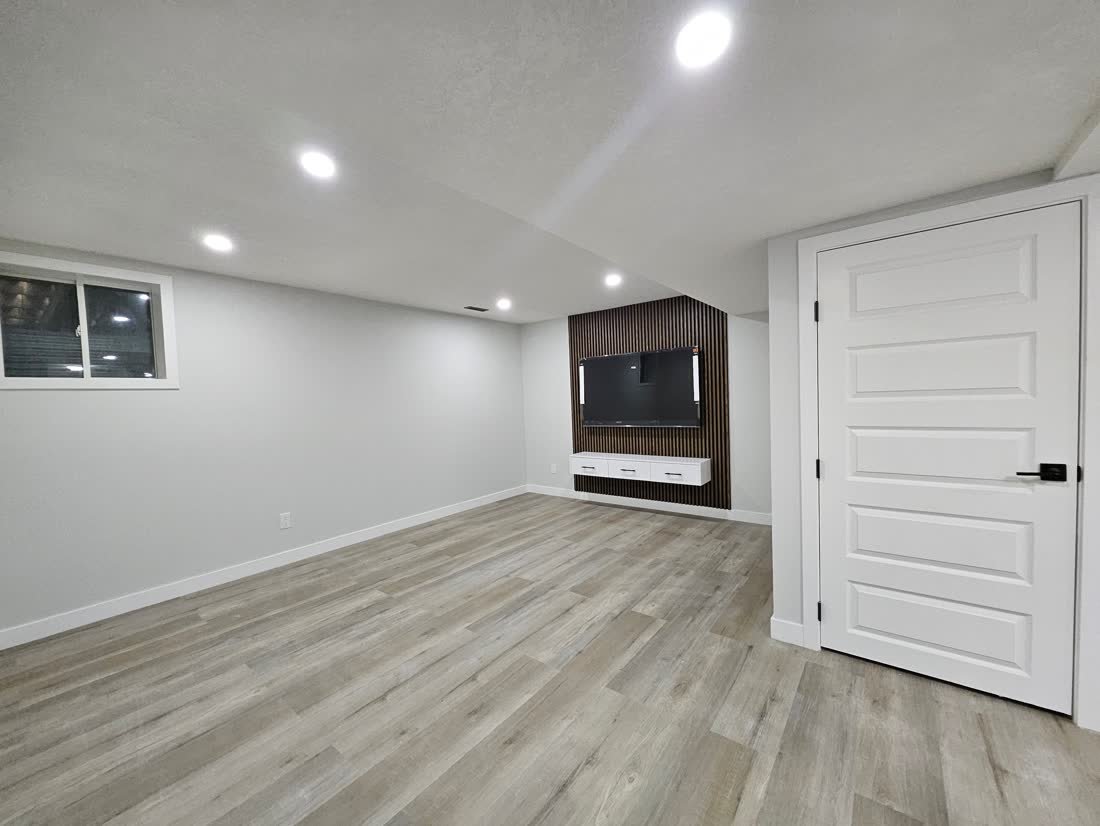
The permit question decides a lot of this
This is where many Calgary homeowners lose money without realising it. Work done without permits has to be disclosed at sale. Buyers and their lawyers treat undocumented work as a risk, and risk gets priced in.
In practice it can mean a price reduction, a condition requiring correction before closing, or in the worst case the work being opened up so it can be inspected. A permitted basement with closed inspections avoids all of that, because the paperwork answers the question before it is asked.
We cover the full cost of that mistake in what an unpermitted suite costs you when you sell.
A legal suite is a different proposition entirely
A finished basement adds living space. A legal secondary suite adds an income producing unit, and that is understood differently by buyers, by lenders and at valuation.
The requirements are real: a separate entrance, an EGRESS WINDOW in every bedroom, rated fire separation, interconnected alarms, compliant ventilation and minimum ceiling height. But a registered suite is an asset that carries forward, which a finished rec room does not. The comparison is set out in finished basement or legal suite.
Not sure which your basement should be? The consultation is free and includes free 2D structure design. We measure what the space allows and tell you plainly. Call 587 439 5191.
What adds value and what does not
- Adds value: an additional bedroom with a compliant EGRESS WINDOW, a full bathroom, proper lighting, and permits with closed inspections.
- Adds value for the right buyer: a home gym, a theatre room, a wet bar. These sell the house faster to the person who wants them and are neutral to everyone else.
- Adds little: highly personalised finishes, over specified materials, anything a buyer will plan to remove.
- Subtracts value: undocumented work, rooms called bedrooms without a compliant EGRESS WINDOW, and visible moisture problems.
The cheapest square footage you will ever add
Whatever the valuation, the arithmetic of a basement is unusually good. The foundation, the walls and the roof already exist and are already paid for. You are not excavating, not extending and not touching the roofline.
That is why basement development consistently returns more usable space per dollar than building outward. The question is not usually whether to do it, but whether to do it as living space or as a legal suite.
Do it so the paperwork survives you
Whatever you build, build it under permit and keep the records. The inspections are the proof, and the proof is what protects the value when you eventually sell. Every project we complete is permitted, inspected and backed by a one year workmanship warranty.
Key facts
- Developing a basement moves square footage from unfinished to finished, heated living area, which is what appraisals count.
- Below grade finished space is generally valued differently from above grade space.
- Work done without permits must be disclosed at sale and is commonly discounted or made a condition of closing.
- A legal secondary suite is treated differently from a finished basement because it is an income producing unit.
- A room can only be counted and advertised as a bedroom if it has a compliant EGRESS WINDOW.
- Basement space is the cheapest floor area to add because the foundation, walls and roof already exist.
Frequently asked
Does a basement count in a home square footage in Calgary?
Finished basement area is generally recorded and valued separately from above grade area rather than simply added to it. What changes at valuation is that the space moves from unfinished to finished, heated living area.
Will an unpermitted finished basement hurt my sale?
It can. Undocumented work has to be disclosed, and buyers commonly respond with a price reduction, a condition requiring correction, or a request to open up the work for inspection. Permitted work with closed inspections avoids that conversation.
Does a legal suite add more value than a finished basement?
They are different propositions. A finished basement adds living space. A registered legal suite adds an income producing unit, which buyers and lenders understand differently. Which is right depends on whether you want income or family space.
What basement features do buyers actually pay for?
An additional bedroom with a compliant EGRESS WINDOW, a full bathroom and good lighting are reliably valued. Gyms, theatres and wet bars sell the house faster to the right buyer and are broadly neutral to everyone else.
Is it worth finishing a basement before selling?
It depends on timeline and local market conditions, and it is worth getting an opinion from an agent who knows your community. What is clear is that a rushed, unpermitted finish is usually worse than leaving the space unfinished.