The cost of adding a basement bathroom in Calgary is driven mainly by whether a plumbing rough in already exists. If drainage reaches the location at the correct fall, the job is straightforward. If not, the slab must be broken, pipe run and concrete re-poured, which is the largest single variable in the quote.
This is the question we are asked more than any other, and the honest answer is that the number is decided by plumbing, not by fixtures. Where the drain already runs matters far more than which vanity you pick.
Why there is no single price
Two basements of identical size can differ enormously on this one job. The variable is whether drainage already reaches the location you want the bathroom in, at the correct fall, and whether it can tie into the existing stack without breaking concrete.
If a rough in is already there, you are fitting a bathroom into prepared ground. If it is not, you are breaking the slab, running pipe at the right slope, re-tying to the stack and re-pouring. That is excavation and concrete work inside your house, and it is the single largest swing in the quote.
How do I know if I have a rough in?
Look at the slab in the unfinished area. A rough in usually shows as two or three capped pipe stubs coming up through the concrete, often clustered together, sometimes with a larger one for the toilet and smaller ones for the sink and shower drain. Many Calgary homes built in recent decades have one, placed by the builder for exactly this reason.
If you cannot find it, do not assume it is absent. It is sometimes buried under a thin skim or hidden behind stored items. We check for it during the free consultation before quoting anything.
What else moves the number
- Venting. Every fixture needs venting, and extraction must be ducted to the exterior rather than terminated in the joist space. That duct run has to go somewhere, and the route affects the work.
- Waterproofing. Behind the tile there is a proper system on the wet walls. This is not optional and it is not where to save money. Bathrooms are where shortcuts surface first, usually two winters later.
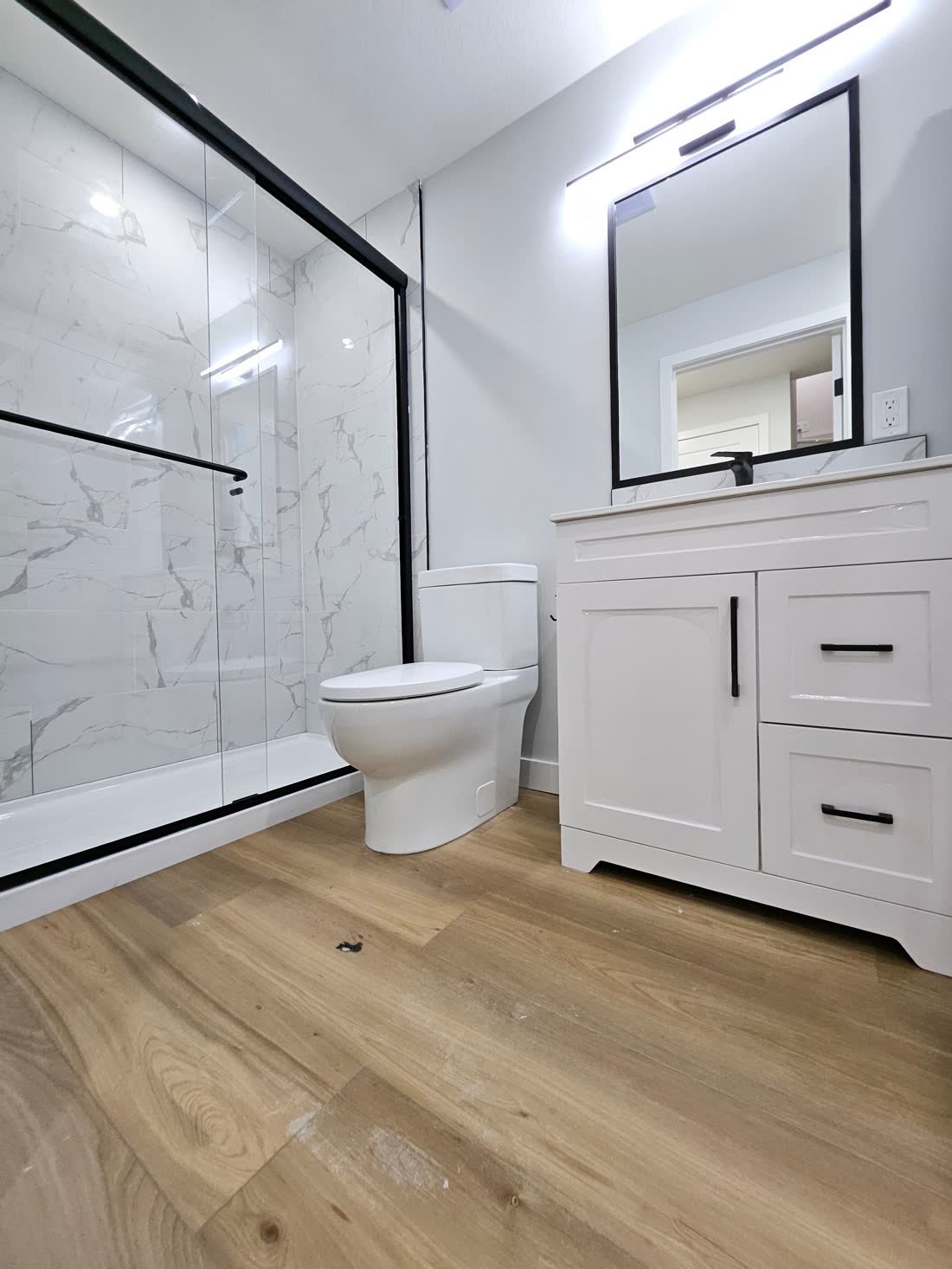
- Fixture level. A three piece with a standard shower base is a different build from a tiled curbless shower with a glass enclosure.
- Whether it serves a suite. A bathroom inside a legal secondary suite carries the suite requirements with it, which is a different scope again.
Want a real number for your basement? The consultation is free and includes free 2D structure design. We find the rough in, check the stack and give you a fixed, itemised quote. Call 587 439 5191.
Why we will not quote a rate per square foot
Because it would mislead you. A rate hides the one variable that decides your number. Two neighbours on the same street can get quotes that differ substantially, and the reason is almost always under the floor rather than above it.
We quote from a measured plan after seeing the space. That quote is fixed and itemised, so you can see what the plumbing portion actually costs and decide accordingly. The same logic applies across the whole build, which we cover in what drives the cost of a basement development.
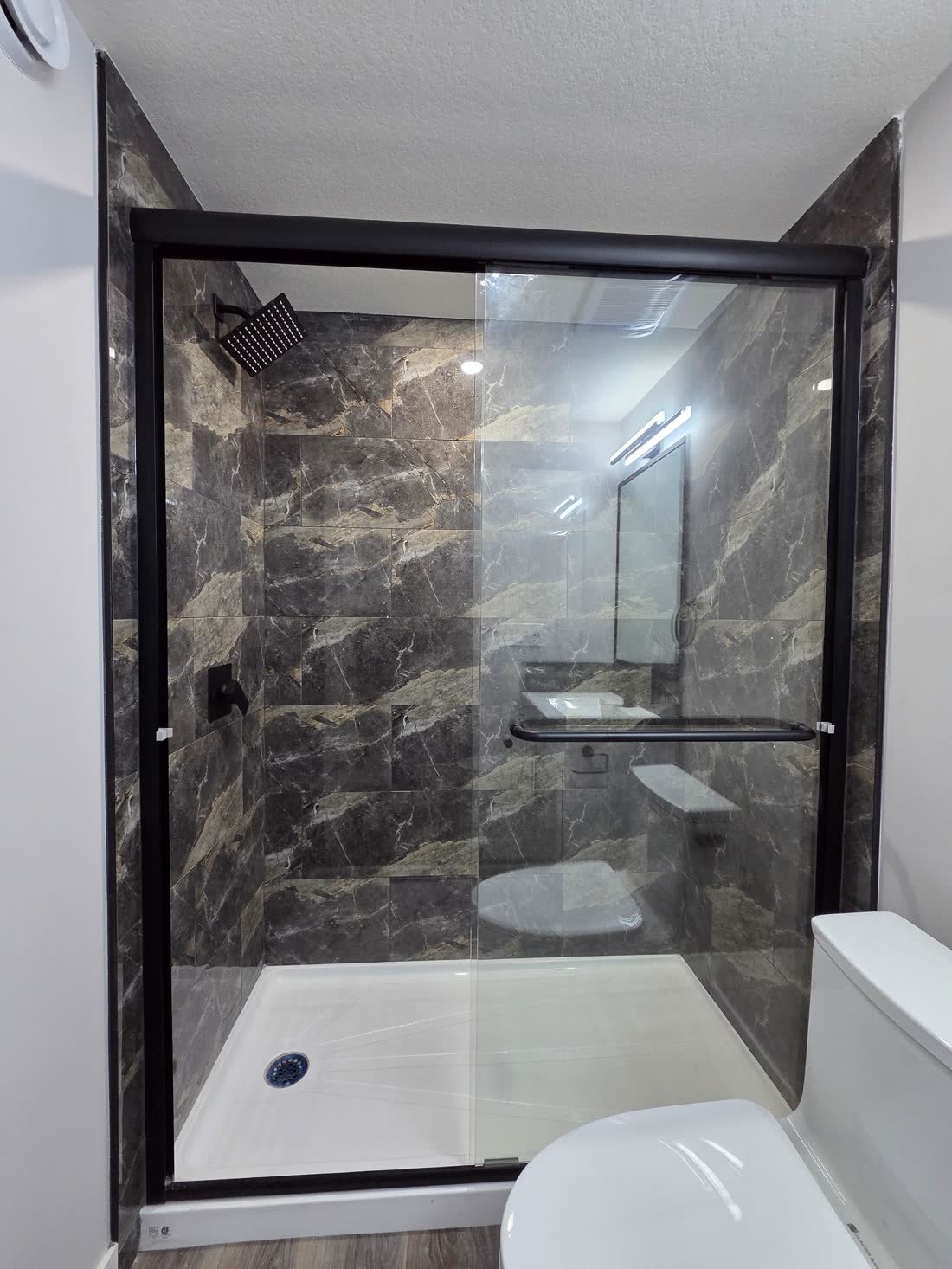
The sequence that keeps it dry
Plumbing rough in is inspected before anything is closed up. Then insulation and vapour barrier, then board, then the waterproofing system on the wet walls, then tile, then fixtures. Each stage depends on the one before it being right.
Getting that order wrong is how basement bathrooms fail. Tile over an unsealed substrate looks identical on handover day and very different three years later. Our full process is set out in how it works, and the work carries a one year workmanship warranty.
Does it need a permit?
Adding a bathroom means plumbing work, which generally requires a permit and inspection in Calgary. We prepare the drawings, submit the application and attend the inspections as part of the job rather than handing it back to you. More on that in basement development permits in Calgary.
Key facts
- The largest cost variable is whether a plumbing rough in already exists in the slab.
- A rough in usually appears as two or three capped pipe stubs coming up through the concrete.
- Creating new drainage means breaking the slab, running pipe at the correct fall, tying into the stack and re-pouring.
- Extraction must be ducted to the exterior, never terminated in the joist space.
- Adding a bathroom involves plumbing work, which generally requires a City of Calgary permit and inspection.
- Plumbing rough in is inspected before anything is closed up, and waterproofing goes on before tile.
Frequently asked
How do I know if my basement has a bathroom rough in?
Look for two or three capped pipe stubs coming up through the slab in the unfinished area, usually clustered together. Many Calgary homes built in recent decades have one. If you cannot find it, do not assume it is absent, as it is sometimes covered. We check during the free consultation.
Can a bathroom go anywhere in the basement?
Not quite. Drainage has to run at the correct fall and tie back into the existing stack, so the location is constrained by where that is achievable. Ceiling height and beam positions also affect where a shower enclosure will work.
Do I need a permit to add a basement bathroom in Calgary?
Generally yes, because it involves plumbing work. We prepare the drawings, submit the permit application and attend the required inspections as part of the job.
What is an upflush system and should I use one?
It is a pump assisted system that moves waste upward, used where gravity drainage is impractical. It avoids breaking the slab but introduces a mechanical component that can fail. Whether it suits your situation depends on the layout, and we will tell you honestly at the consultation.
Where should I not save money on a basement bathroom?
Waterproofing and venting. Both are invisible once finished and both are where failures start. Fixture level is the sensible place to adjust a budget, not the systems behind the wall.