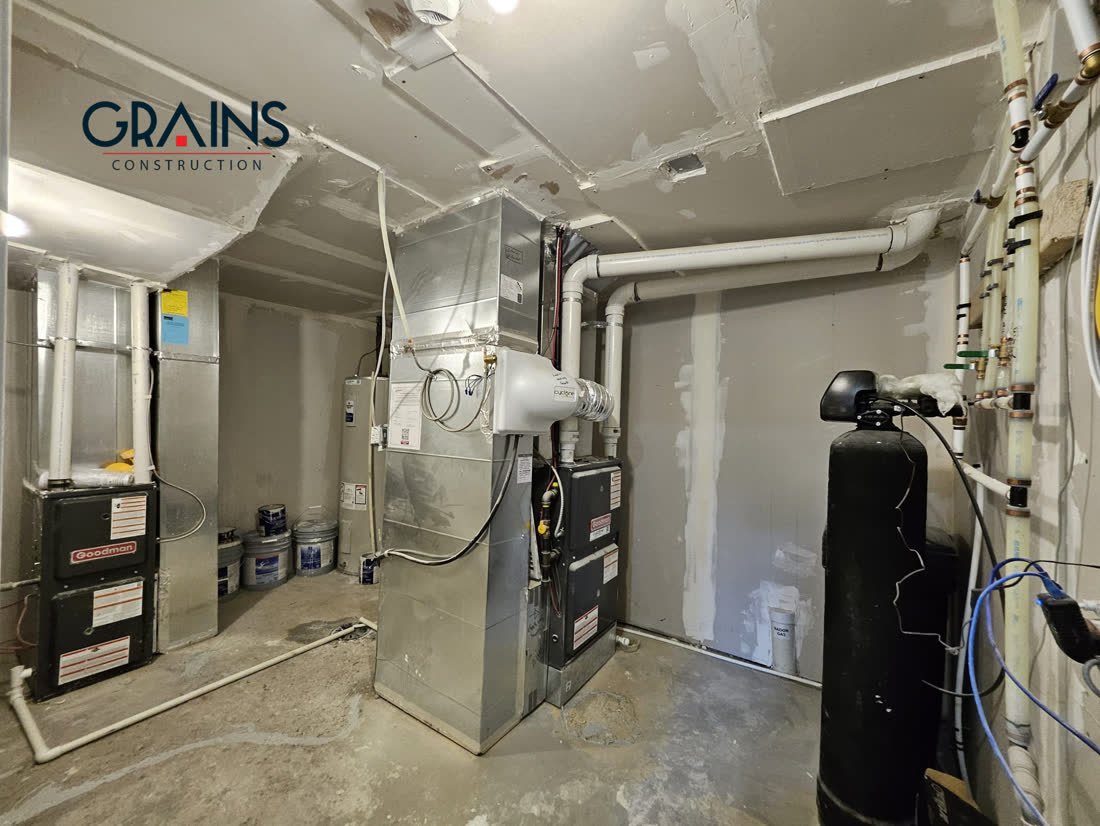
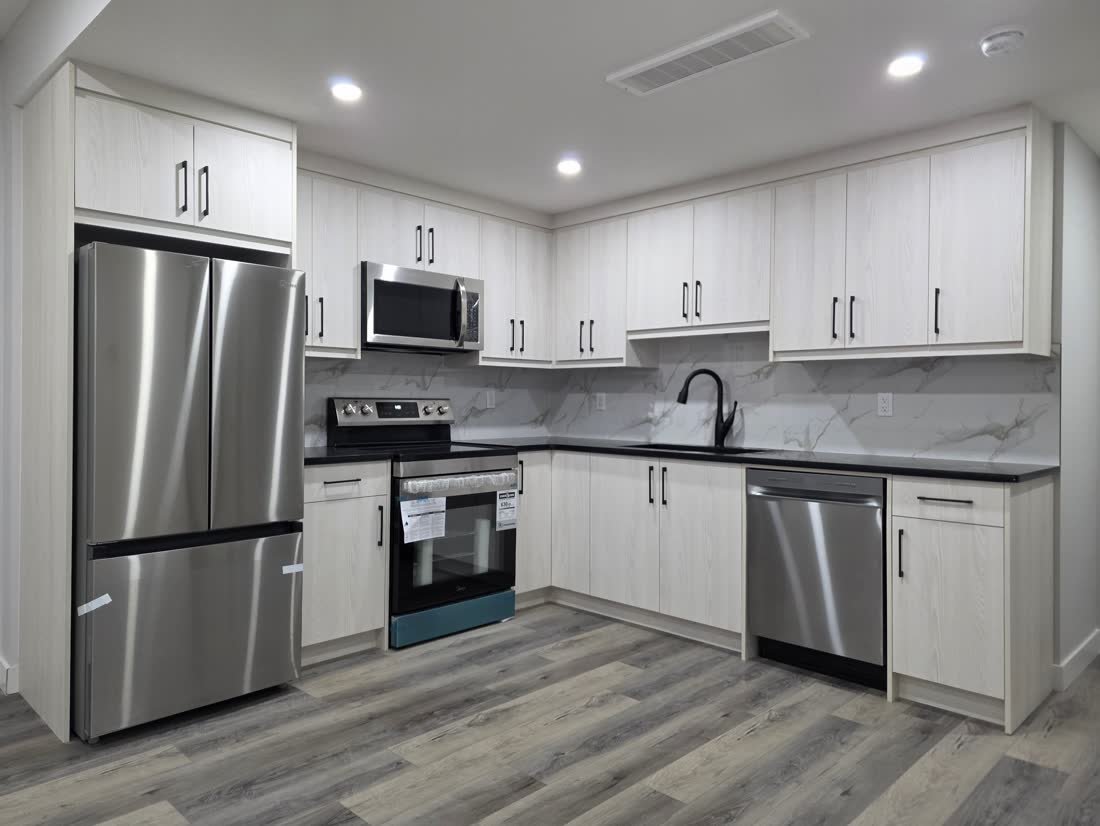
A Calgary basement development is inspected at framing, electrical rough in, plumbing rough in, insulation and vapour barrier, fire separation on suites, and final. Each stage happens immediately before that work is covered, which is why the sequence cannot be rearranged.
Inspections are staged, and the staging is the whole logic. Each one happens at the moment just before that work becomes invisible forever.
The sequence
- Framing. Structure, headers over new openings, bracing, and how walls have been built around beams, posts and mechanical runs.
- Electrical rough in. Circuits, boxes, wire runs and panel capacity, before insulation goes anywhere near them.
- Plumbing rough in. Supply, drainage, fall and venting, pressure tested before anything is closed.
- Insulation and vapour barrier. Correct materials and, critically, continuity. This is what keeps moisture out of the assembly.
- Fire separation. On suites, the rated assemblies and every penetration through them.
- Final. Alarms, EGRESS WINDOW openings, ventilation, and whether what was built matches what was approved.
Why the order cannot be rearranged
An inspector cannot verify a wire run that is behind drywall, or a vapour barrier that has been boarded over, or a drain that has been buried under a slab pour. Each inspection exists because that is the last moment anyone can look.
Which is why work done without permits is a genuine unknown rather than merely undocumented. Nobody looked, so nobody knows. That is a different thing from knowing it was done badly, and it is why correcting unpermitted work so often means opening up finished surfaces.
Who books them
We do. Each licensed trade pulls and closes its own permit for its own work, and we coordinate the schedule so the right inspection happens at the right moment without the build sitting idle.
That coordination is most of the practical value. A missed inspection does not just cost a day, it can mean uncovering work that has already been closed up.
We handle the whole permit and inspection process. Drawings prepared, applications submitted, every inspection booked and attended through to final approval. Call 587 439 5191.
What final approval gives you
Final approval is what converts the build into a documented record. That record is what an appraiser can rely on, what an insurer can price accurately, and what a buyer sees instead of a disclosure about undocumented work.
On a secondary suite it is also the route to registration, which is what makes the suite something you can advertise openly. The requirement list behind all of it is in legal secondary suite requirements in Calgary, and the permit process itself in basement development permits.
Key facts
- Inspections are staged at framing, electrical rough in, plumbing rough in, insulation, fire separation and final.
- Each inspection occurs at the last moment that work is visible before being covered.
- Plumbing rough in is pressure tested before anything is closed up.
- Final inspection checks alarms, EGRESS WINDOW openings, ventilation and whether the build matches the approval.
- Each licensed trade pulls and closes its own permit for its own work.
- Unpermitted work is an unknown rather than merely undocumented, because nobody inspected it.
Frequently asked
How many inspections does a basement development need?
Typically framing, electrical rough in, plumbing rough in, insulation and vapour barrier, and final, with fire separation added on a secondary suite. The exact set depends on scope.
Who books the inspections?
We do, and we coordinate them so the right inspection happens at the right moment without the build sitting idle. Each licensed trade also pulls and closes its own permit for its own work.
What happens if an inspection is missed?
It can mean uncovering work that has already been closed up, which is why scheduling matters more than it first appears. A missed inspection costs considerably more than a delayed one.
Why does unpermitted work cause problems later?
Because nobody inspected it, so nobody knows what is behind the finishes. Correcting it usually means opening up completed surfaces to verify the hidden work.
What does final approval actually give me?
A documented record that an appraiser can rely on, an insurer can price accurately and a buyer sees instead of a disclosure. On a suite it is also the route to registration.